Case study · Emergency fundraising
Texas Floods 2025
How a national disaster-relief nonprofit went from breaking news to a full multichannel appeal in days, while its relief team was still on the ground.
- Client
- National disaster-relief nonprofit (agency work)
- Timeline
- July 4–14, 2025
- Channels
- Email, partner media, website slide-in, paid search, podcast, paid video, organic social
- My role
- Digital Marketing
The appeal ran across seven channels while relief teams were still arriving.
A partner newsletter and the website slide-in were the two strongest sources of gifts.
In the first email, the video link drew more clicks than the donate button.
The campaign brought in a large wave of first-time donors, most through partner placements.
The challenge
Raise emergency funds while the story was still unfolding
Flash floods tore through the Texas Hill Country on July 4, 2025. The nonprofit’s disaster team was on the road the next day and reporting from Hunt, Texas the day after. Marketing had to keep pace: every channel needed a message, creative and a donation path, built as the facts changed hour by hour.
July 4
Floods hit
News breaks overnight. Campaign planning starts the same day.
July 5
Team en route
First alert post and first email go out as the relief team heads to Texas.
July 6
Live from the field
Updates from Hunt, Texas feed social, email and the website.
July 7–9
Partners join
Partner newsletters, media placements and a corporate partnership extend reach.
July 14
Wrap and report
Results pulled from six reporting sources and turned into lessons for the next response.
Channel mix
Seven channels, one story
Each channel had a job. Together they moved people from the news, to the story, to a gift.
A series of sends to general and donor lists, each built around a new update from the field.
Partner media
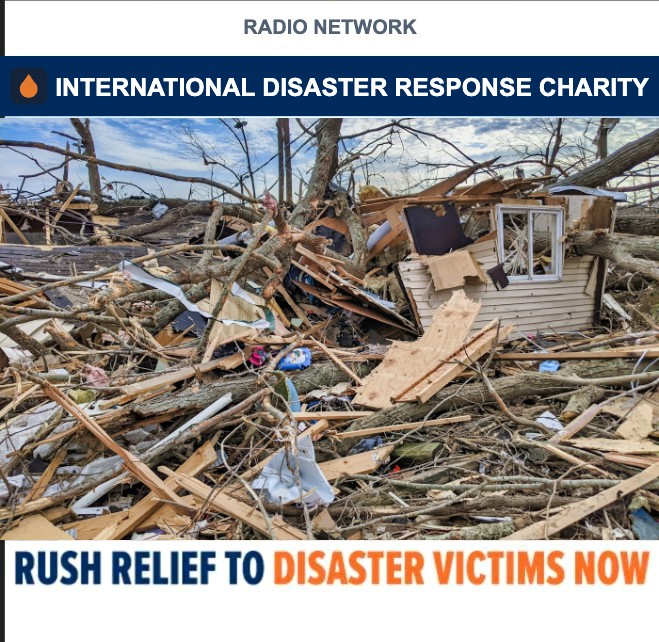
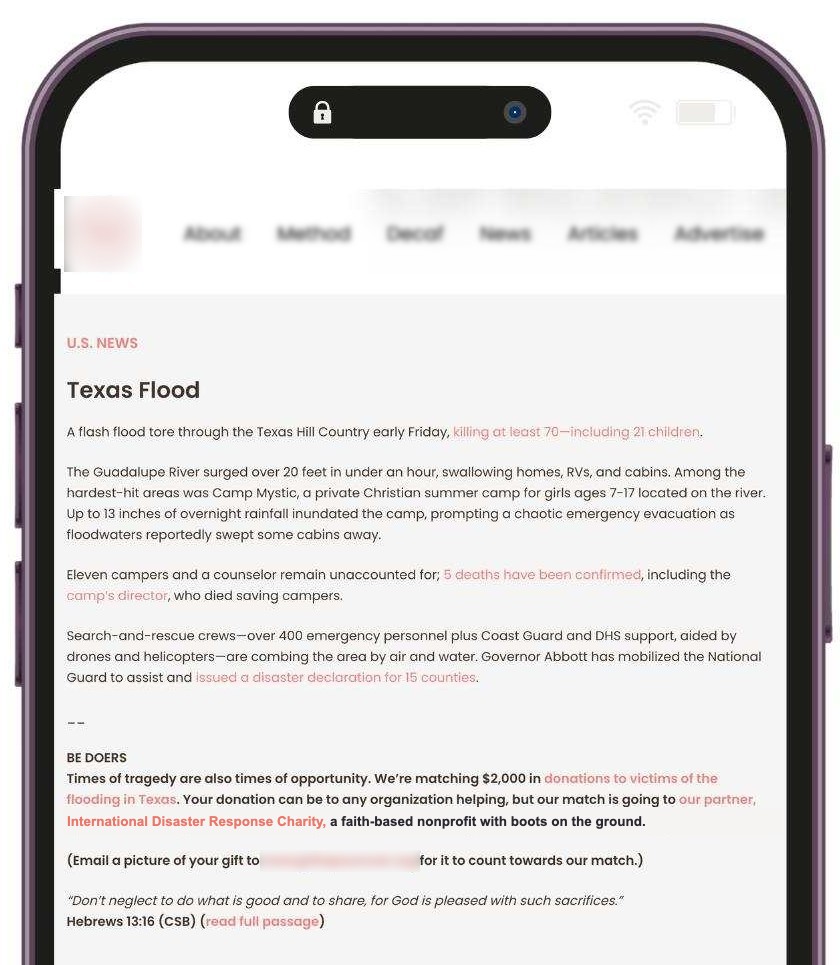
A faith-based newsletter and a radio network carried the appeal to audiences who already trusted them.
Website slide-in
A slide-in on the nonprofit’s own site caught visitors who arrived from the news.
Paid search
Flood-specific sitelinks on brand ads, with extra budget, met the surge in name searches.
Podcast
A podcast feature with its own short web address for listeners.
Paid video
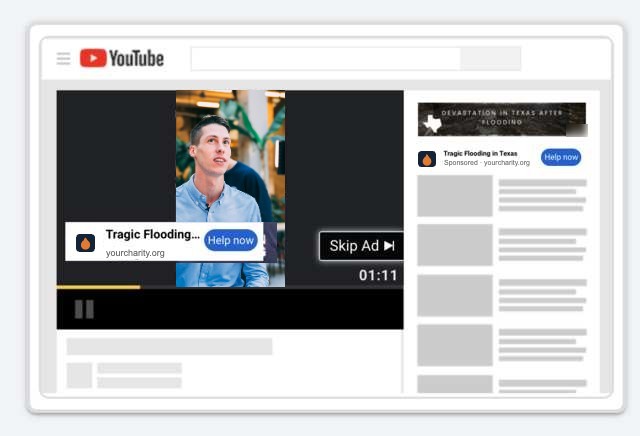
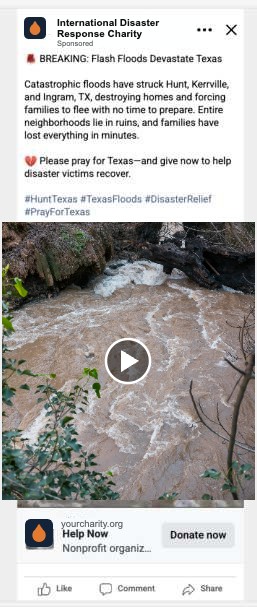
Short field videos ran as Facebook and YouTube ads on a small awareness budget.
Organic social
Daily field updates and survivor stories on Facebook and Instagram.
Donation pages
Each channel had its own tracked giving page, so every gift could be traced to its source.
Inside the creative
What we built, and why
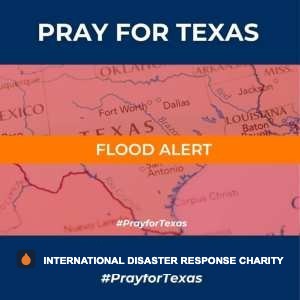
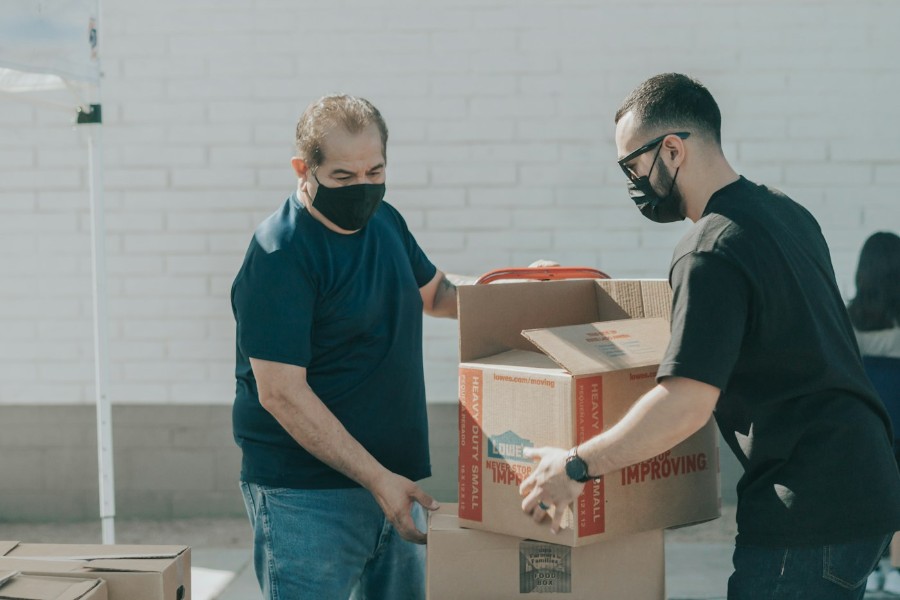
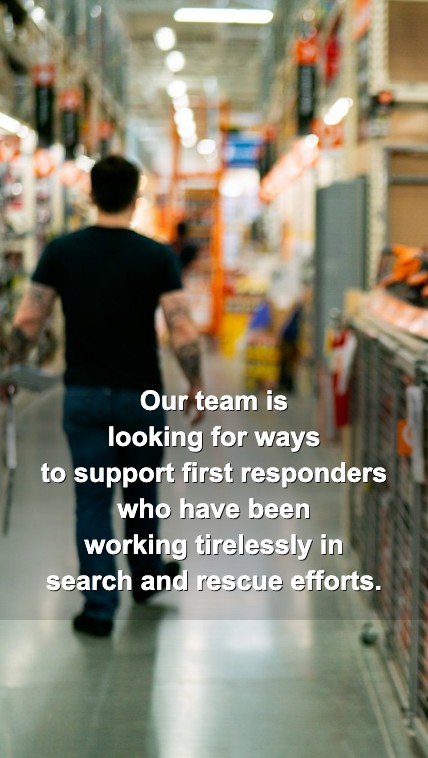
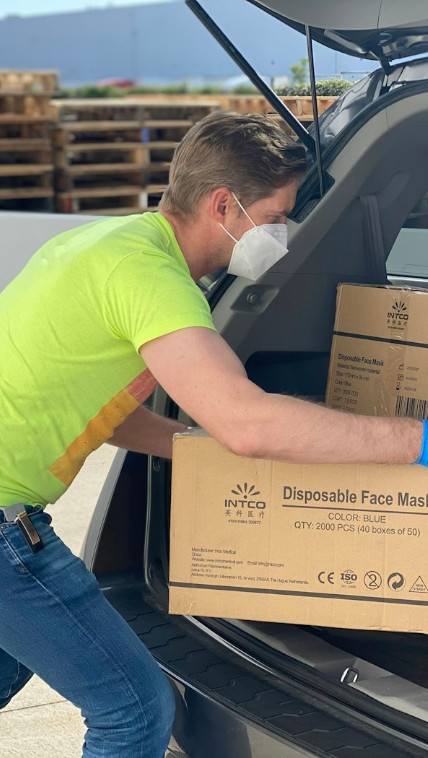
Mock-ups of the live creative from July 2025, rebuilt with stock photos and a fictional organization name.
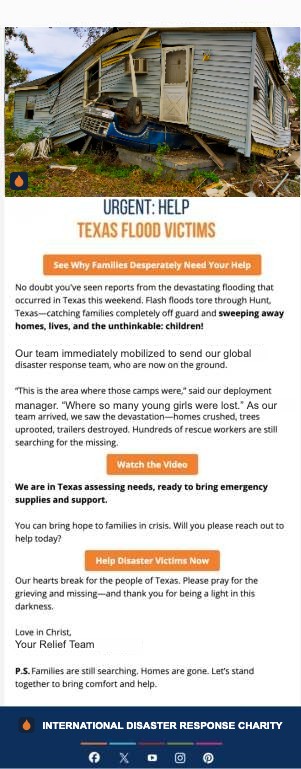
Show the story before the ask
The first email opened with a quote from the deployment manager on the ground, offered a field video, and only then asked for a gift.
- Readers clicked the video link more than the donate button.
- The video kept people with the story long enough for the later ask to land.
- Later sends followed the same pattern with each new update.
Website slide-in
Catch the visitors the news sent
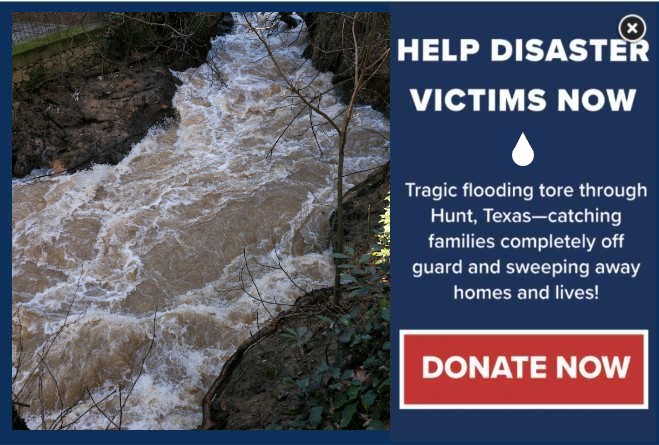
News coverage sent a wave of people to the nonprofit’s website. A slide-in with flood footage and one clear button met them on any page, instead of hoping they would find the donate page.
- One message, one button, no navigation needed.
- One of the two strongest gift sources in the whole campaign.
Paid search
Meet the surge in brand searches
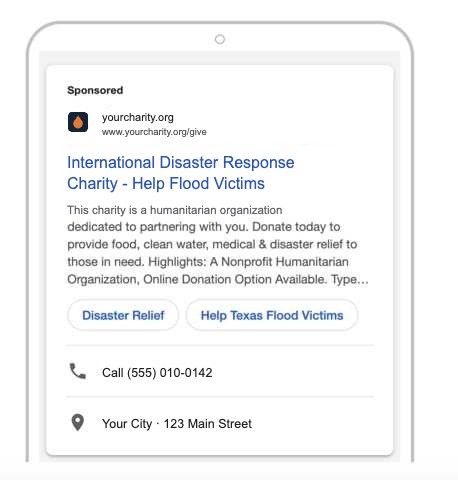
When a disaster makes the news, people search for the relief groups they hear about. Flood-specific sitelinks went onto the brand ads, with extra budget, so those searches led straight to the flood appeal.
- A fast change to an existing campaign, not a new build.
- Brought in new donors as well as gifts from existing supporters.
Campaign creative
Across every channel
Mock-ups of the live ads and posts, rebuilt with stock photos and a fictional organization name.
Partners and social
Borrowed trust, field-first posting
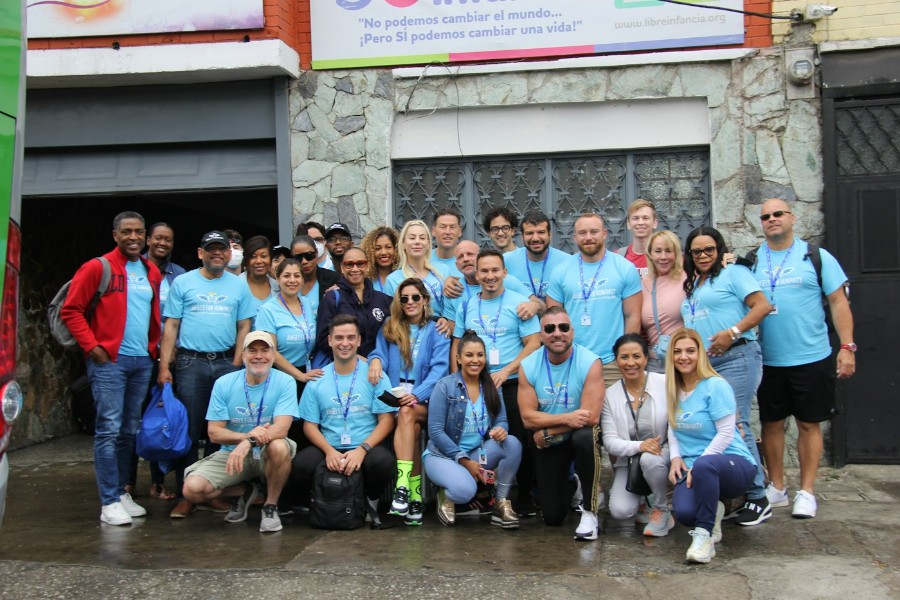
A faith-based news newsletter offered to match readers’ gifts to the nonprofit. That one partner link became the campaign’s biggest source of first-time donors. A radio network banner and a podcast feature carried the appeal further.
On social, the posts that reached the most people were updates straight from the field. The posts people engaged with most were personal: a survivor’s story, a first responder’s story, a corporate partner’s volunteers loading supplies.
Takeaways
Lessons for the next disaster response
Lead with owned and partner placements
The website slide-in and a trusted partner’s newsletter outperformed every paid channel.
Show the story before the ask
A field video earned more clicks than a donate button and set up the ask.
Fund brand search when news breaks
A small budget increase and one new sitelink captured people already searching for the nonprofit.
Post from the field, fast
Raw updates from the ground reached the most people. Polished graphics came second.
My role
Digital Marketing
Digital marketing for the campaign across email, partner media, the website, search, video and social, working with the agency and the nonprofit’s in-house team.
Work with me
Need a campaign that moves this fast?
Detailed results are available to discuss in interviews.